Thank you for helping us reach our goal on KICKSTARTER !!!
Make A Tax Deductible Donation to Jan Karski Film Project!
KARSKI
&
The Lords of
Humanity

a Film by
Slawomir Grünberg
Almost every individual
was sympathetic to my reports concerning
the Jews, but when I reported to the leaders of governments,
they discarded their conscience, their personal feeling.
Jan Karski

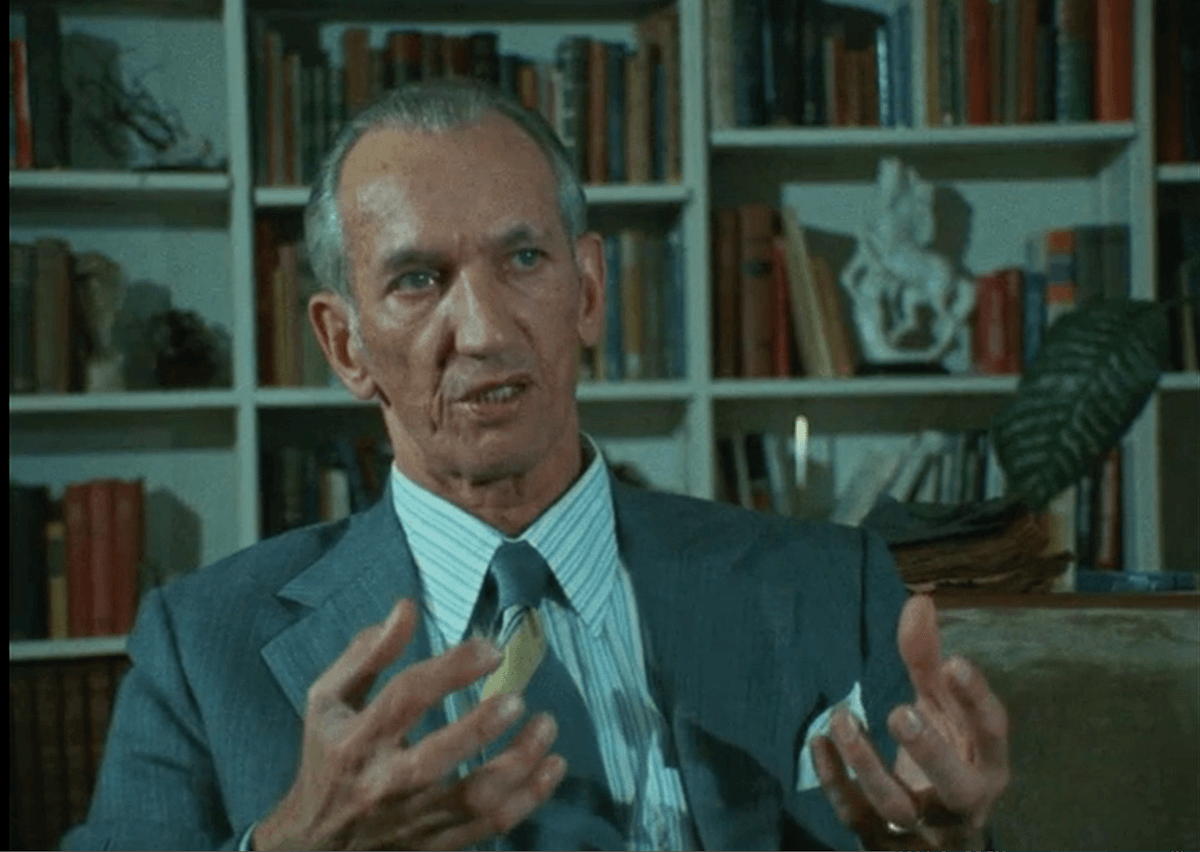
We propose a film about Jan Karski – an emissary of the Polish underground government during World War II whose most prominent mission was to inform the allied powers of Nazi crimes against the Jews of Europe in order to try to prevent the Holocaust as we know it.
This film will tell an incredible story of a single life joggled between life and death while fulfilling a desperate mission to stop the annihilation of European Jews. It will be a story of a man who infiltrated both the Warsaw Ghetto and a Nazi concentration camp and carried out eyewitness accounts of the atrocities to the West, where the report was met mostly with disbelief and no concrete action was undertaken in order to prevent the Holocaust.
Link to: NDTV Interview with Slawomir Grunberg on November 22, 2012
http://www.kickstarter.com/projects/1856559857/karski-and-the-lords-of-humanity/posts/357949
Link to an article from Gazeta Polonium, Nov 20, 2012 by Margaret Bonikowska
Renowned American Polish director Slawomir Grunberg is making a film about Jan Karski
Link to:
Message from Director Slawomir Grunberg on November 16, 2012
http://www.kickstarter.com/projects/1856559857/karski-and-the-lords-of-humanity/posts
Link to: 'The Jan Karski Story' on Net Currents TV which features Slawomir Grunberg working on his film,
May, 30, 2012
http://netny.net/currents/video/stories/posthumous-honor-for-brave-polish-catholic-53012/
Link to: A radio interview with Slawomir Grunberg on "Karski & The Lords of Humanity" for "Gazeta Gazeta" - the leading Polish language newspaper in Canada. Malgorzata P. Bonikowska, January 7, 2013
"Bohater ciagle za malo znany" (in Polish)
http://www.gazetagazeta.com/2013/01/bohater-ciagle-za-malo-znany/#more-14612
http://www.facebook.com/KarskiandTheLordsOfHumanity

Project Description
The film is a 90-minute feature-length and 2x45 minutes TV broadcast version production shot in high definition in wide-screen format. Our goal is to have the film premiere in June 2014 in the US, Poland, and Israel, as part of an international campaign to celebrate one-hundredth anniversary of Jan Karski’s birth.
There is a large precedent for documentary films combining archival footage with modern-day interviews and scenes in order to recount historical events. While our project retains some of the basic features of such a documentary structure, it breaks the traditional format through the incorporation of state-of-the-art animation technologies. The latter not only embellish the form, but also facilitate the transmission of the content. All this is meant to broaden the prospective audience of the film. The innovative approach in the combination of academic reliability of a documentary and the fiction-like appeal of the animated reenactments will likely attract also the younger and the technologically inclined viewer. We will be able to recreate his treacherous visit to the Warsaw Ghetto, where he witnessed the indignities and traumas to which Jews were being subjected in Nazi-occupied Poland only months preceding the Final Solution. Hours of interviews recorded with Jan Karski after the war will provide the most authentic first person narrative, and will accompany the animated reenactment of events against the background of authentic archival footage.
The audiences will be able to draw new perspectives on the significance of individual ethical choice and civic and political engagement, as they are introduced to our larger-than-life protagonist. A secret agent on the one hand, and an agent of dialogue on the other, Karski come across as a James Bond – like character, who sets out not so much to save the world, but – one might say – to try to save the world’s conscience in the face of a humanitarian disaster.
We expect our audience to be diverse not only in terms of age, but also in terms of religion, ethnicity, and cultural background. The viewers will learn about Karski’s World War II mission, but they will also come away with an appreciation of Karski’s contribution to the humanities. Among our primary targets will be the audiences professionally or informally associated with the humanities and with social studies. We will reach university and high-school students by mean of various social media such as Facebook, Twitter, and You Tube. Podcasts will be used to publicize the story and the production process and will be applied for promotional purposes. Podcasts, which are the online delivery of video on demand clips, are specifically suitable for use in high schools and college courses. We have secured the www.jankarski.com domain name and the official film website has already been set up.
Status of the Film & Work Plan
Slawomir Grunberg (Emmy Winning Documentary Filmmaker with over 40 documentaries on his account) has began his journey with the project Karski & The Lords of Humanity over 5 years ago, in 2007.
Official website: www.jankarski.com was launched in 2008. Since then the filmmakers have devoted two weeks to extensive research at the Hoover Institution, Palo Alto, CA, which holds the Jan Karski archives. As a result, dozens of photographs and over 40 hours of audio-visual materials were scanned or transferred from VHS to DVD. They include various American, British and Polish programs and films, featuring our protagonist Jan Karski, as well as around 8 hours of never-broadcast interviews conducted by members of our media staff and associates, to which we have the exclusive right. We have also identified all the archival footage and photographs, which we will incorporate in our narrative. Another part of our research consisted in a thorough selection and analysis of the textual resources and scholarship, which will further refine our intellectual approach to the topic.
There is a large precedent for documentary films combining archival footage with modern-day interviews and scenes in order to recount historical events. While our project retains some of the basic features of such a documentary structure, it breaks the traditional format through the incorporation of state-of-the-art animation technologies.
The estimated date of completion of the project is July 31, 2014 which will correlate with the 100th Anniversary of Jan Karski's Birthday. The completed film will be presented as a feature length theatrical version (90 minutes) and two parts (45 minutes each) television version, all in high definition format. Original music score will be composed for the film. The film will be distributed by LOGTV, Ltd (www.logtv.com/films) through Film Festivals, Television stations, Movie Theaters, On-Line Movies, DVDs and Blue-Ray Discs for the Educational Market (Schools, Universities, Libraries).
Filming
Over the past years (2011/12),the filmmakers conducted a number of video interviews, performed further research for the project, as well as continued fundraising efforts. Interviews have been conducted with the following individuals who all discussed their personal connection to Jan Karski and his legacy.
Washington, DC; US
Zbigniew Brzezinski, former U.S. National Security Advisor, Jan Karski's friend.
Rabbi Harold White, Georgetown University.
Henryk Grynberg, Writer, Jan Karski's friend. Additional footage shot at Georgetown University Campus, Jan Karski's bench, Washington DC.
Kaja Mirecka Ploss, founder of The Jan Karski Institute for Tolerance and Dialogue, a close friend of Karski's.
Joshua Muravchik, American Enterprise Institute for Pubic Policy Research, student of Jan Karski's.
Dr. Ken Adelman, diplomat and policy writer, student of Jan Karski's.
London; UK
Sir. Martin Gilbert, official biographer of Winston Churchill, World War II scholar.
Tel Aviv and Jerusalem; Israel
Simcha Rotem ‘Kazik’, the last surviving leader of the Warsaw Ghetto Uprising, a friend of Jan Karski's.
Dr. Ephraim Zuroff, Director of Simon Wiesenthal Center.
Dr. Meir Rosenne, former Israeli Ambassador to the US.
Dr. Laurence Weinbaum, World Jewish Congress, Jan Karski's assistant at Georgetown University.
Stanislaw Aronson, Author.
At an earlier stage, two in-depth interviews were conducted with Prof. Wladyslaw Bartoszewski, former Polish Minister of Foreign Affairs and a friend of Karski's. Ceremonies of the unveiling of a monument to Jan Karski (Jan Karski's Bench) in front of the Polish Consulate in New York City, as well as in front of the Diaspora Museum in Tel Aviv have been captured on footage. Also captured is the dedication of the Madison Ave and 37 St. corner in NYC as “Jan Karski Corner”.
Fundraising plan
Raising funds to complete any movie is
challenging, especially in the current climate
of independent documentary filmmaking,
therefore KICKSTARTER is an increasingly popular
way to fund creative projects. Thanks to our
supporters we not only reached our Kickstarter goal of
$45,000 but actually exceeded it by $15,000.
Some seed money for research and preliminary filming
was acquired from the Polish Cultural Institute in
New York and the Ministry of Foreign Affairs in
Poland. Additional funding was received from
LOGTV, Ltd. and by TVP1 (Polish Public Broadcaster).
We are still looking for funding, which will
enable: the shooting of modern-day documentary
scenes and further interviews (shot on location in
Poland, the UK, and the US), the production
of the animated section of the film, the acquisition
of rights to archival footage, and the creation of
an original music score, editing, and the initial stages
of post-production.
The current fundraising strategy includes applying
for production funds from: The National Endowment
for the Humanities, The National Endowment for the
Arts, Jewish Documentary Fund, The
Sundance Documentary Fund and The Polish
Film Institute. Potential television broadcasters include
in the US (PBS, HBO or History Channel), Europe
(ZDF and WDR Germany, ARTE France, NPO
Holland, Denmark Radio & TV), and Israeli Channel
8. Additionally, we are approaching selected
foundations such as The Taube Foundation and Harry
and Jeanette Weinberg Foundation, as well as
individual philanthropists like Sigmund A. Rolat, who
has already expressed his interest in supporting
the project.
In 2012, a new, ten-minute work-in-progress video,
which includes a sample selection of archival
footage, modern-day interviews and a short
animation segment was created.
The work-in-progress video is used also by
The Jan Karski US Centennial Campaign and Jan
Karski Educational Foundation to support
their activities and can be viewed
at: http://www.youtube.com/watch?v=dchbU6mCLpQ
Distribution strategy
1. The National Television & Film Market.
We plan to distribute Karski and The Lords of
Humanity through the PBS (PBS has already provided
with two written letters of interest) or cable
(History Channel or HBO) networks. By airing the
program on national television, we hope to attract a broad general audience to this very important and
timely issue. Given the subject matter and our
strong track record, we believe our program
has considerable broadcast potential. It will also
be meant for a limited theatrical release.
2. The International Television & Film Market
We plan to self-distribute the program to
the international television market. Films by
LOGTV, Ltd have been broadcast in Germany,
France, Holland, the United Kingdom, Denmark,
Poland, Russia, Korea and Japan. We are confident
that Karski and the Lords of Humanity has
promising international market appeal on television
and in movie theaters.
3. Film Festivals and The Education and Library Market
The current project fits the profile of many national
and international film festivals across the world.
Festivals with history, social justice and human
rights themes will find an interest in Karski, as will
the many established Jewish film festivals. We plan
to distribute the program on DVDs and Blue-Ray
Discs through LOGTV, Ltd. our non- profit Production
and Distribution Company. An Educator’s Guide and
the website will supplement the film by
providing background, resource and contact
information. By developing these resources for
educators, media users, and the general public, we
hope to promote a more thoughtful engagement of
the subject. It will be sent to schools, universities
and libraries. The guide will include information about
the film and the issues it raises, discussion
questions, and sources of more information.
The Production Team
This film follows the significant number of Slawomir Grunberg’s films, which address and explore the humanities themes: School Prayer (Emmy Winning), The Peretzniks, Paint What You Remember, The Legacy of Jedwabne, Saved by Deportation, In the Name of Their Mothers: The Story of Irena Sendler, Fenceline (Directed by Mary Skinner) and Oscar Nominated Sister Rose’s Passion (Directed by Oren Jacoby). Among others in our production team we have such names as: Yoni Goodman (Director of Animation of the Academy Award Nominated “Waltz with Bashir”), Tom Wood (author of the book “Karski: How One Man Tried to Stop the Holocaust”), Dariusz Jablonski (Producer/Director of highly awarded film “Photographer”).
- Director/Producer: Slawomir Grunberg (USA)
- Second Director & Editor: Katka Reszke(Poland/USA)
- Director of Animation: Yoni Goodman (Israel)
- Director of Photography: Slawomir Grunberg (USA)
- Co-Producer: Joachim Schroeder (Germany)
- Co-Producer: Dariusz Jablonski (Poland)
- Marek Rozenbaum (Israel)
- Co-Writer: Katka Reszke (Poland/USA)
- Co-Writer: Thomas Wood (USA)
- Co-Writer: Maciej Kozlowski (Poland)
- Fundrising Manager: Lea Wolinetz (USA)
Current Production Companies Involved:
LOGTV (USA), Preview Production (Germany), Apple Film Productions (Poland), Transfax Film Production (Israel)
Official Website: www.jankarski.com
For more information and publicity on
Jan Karski see also:
Jan Karski Educational Foundation
http://www.jankarski.net
http://www.google.com/culturalinstitute/#!exhibit:exhibitId=QR_UaCtP
http://www.wallenberg.umich.edu/karski.html
http://partners.nytimes.com/library/world/europe/071500poland-karski.html
Jan Karski: Niedokonczona misja
http://www.jankarski.org
The Honorary Committee of the Film Project
The following people expressed their interest in serving as members of the film project's Honorary Committee:
Kenneth Adelman, Diplomat and Policy Writer, Jan Karski's student
Wladyslaw Bartoszewski, former Polish Minister of Foreign Affairs
Michael Berenbaum, former President and CEO of the Survivors of the Shoah Visual History Foundation
David Harris, Executive Director, American Jewish Committee
Krzysztof W. Kasprzyk, former Polish Consul General of Poland in New York
Joshua Muravchik, American Enterprise Institute for Pubic Policy Research, Jan Karski's student
Tom Pickering, former U.S. Ambassador to the United Nations
Kaya Mirecka Ploss, Founder of The Jan Karski Institute for Tolerance and Dialogue
Andrzej Rojek, Founder of Jan Karski Educational Foundation
Sigmund A. Rolat, Chairman of the North American Council of the Museum of the History of Polish Jews
Radoslaw Sikorski, Minister of Foreign Affairs, Poland
Alex Storozynski, President of The Kosciuszko Foundation, USA
Wanda Urbanska, Founder of Jan Karski Educational Foundation
Jan Karski
Jan Karski was born in 1914 in Lodz, Poland. Christened Jan Kozielewski, he was raised by his intelligentsia family, which had very patriotic, Polish Catholic roots. The name Karski was one of his military pseudonyms after he joined the Underground Bureau of Information and Propaganda, whose mission was to resist Nazi occupation. During World War II, he became a courier between the resistance movement in Poland and the Government-In-Exile. What turned out to be Karski’s most important mission and one of the most important missions in the history of World War II, took place in the Summer of 1942. He was already in the final stages in preparation for his next trip to meet the representatives of the Polish government in exile, and the British officials. Before his trip he would be approached by the representatives of Jewish organizations from the Warsaw Ghetto, were to request that concrete information about the situation of the Jewish population be carried to the Allies in a plea for help. The Jewish leaders who met with Jan believed that no one in the West would listen to him unless could provide a first hand description of what taking place in the ghetto. Karski needed to see the extermination machine in operation, in person. This was beyond the scope of Karski’s duties as an underground emissary, but he agreed to follow this suggestion.
Following the meeting with the Jewish leaders, Karski was smuggled into the Warsaw Ghetto. What he saw there would haunt him for the rest of his life. If the ghetto experience wasn’t enough, Karski was taken to a sorting camp near the death camp of Belzec. There he saw brutality on a mass scale, becoming a witness to genocide. He had to be physically carried out of the camp, where he experienced a nervous breakdown. The photographic memory, which made Karski a brilliant war courier, became his curse, never allowing him to forget the images he would no longer want to remember.
First reports about what Karski saw reached London in the Summer of 1942. A microfilm containing condensed information in English about the persecution of the Jews reached the government. It spoke of Himmler’s order to exterminate half of the Jewish population by the end of 1942 and about one million of those Jews who had already perished.
In the Fall of 1942, the Polish Government-in-Exile released Karski’s report to the world press. Many newspapers around the world carried the news, most did not. In the Summer of 1943, Karski decided to make his way to the United States and carry his testimony directly to President Roosevelt. First, a meeting was arranged with Supreme Court justice Felix Frankfurter. After a detailed description of the ghetto and concentration camp, Frankfurter said that he was unable to believe him.
The meeting with Roosevelt was a secret one. Karski was brought into his office through a back door. During the meeting, Karski steered the conversation from the general matters towards death camps and treatment of the Jews. He talked about the Nazis’ plan to ruin the Polish state, but –more specifically – about the systematic plan to destroy the biological substance of the Jewish nation, which would cease to exist without allied intervention. Roosevelt was polite but somewhat evasive. Karski could not tell whether he believed him or not. What was clear was that Roosevelt made no promise of action.
The course of Karski’s mission, including the visits to the Warsaw Ghetto and to the concentration camp, but also his meetings in London and in Washington will be reconstructed by means of advanced animation technologies. This artistic vision combined with authentic archival footage will create a unique film reality, which will bring this compelling story to life. The viewer will be captured by the fiction-like quality of the animated events, while at the same time she or he will be reminded of the authenticity of Jan Karski’s narrative.
Press Articles
Interview with Slawomir Grunberg, The Polish American Awareness Foundation (PAAF) , Chicago (excerpts)
Grunberg, founder of LOGTV, Log, has been living and making films in the United States for nearly 30 years. Many of these films have dealt with both Polish-Jewish subjects. In 2000, Slawomir Grunberg’s feature documentary, School Pratyer: A Community at War (2000), won the Jan Karksi Award, given to filmmakers who have “exhibited moral courage on behalf of others.” Jan Karski presented Grunberg with the award himself. It was one of his last public appearances. He passed away months later at the age of 86.
“My goal in documentary filmmaking is to make films which can - in even the smallest way - change the world we live in: reveal unknown-but - important situations, help better understand one another, educate people about existing conflicts, and look for solutions in solving them.”
In the case of the Karski documentary, Grunberg sees the opportunity for this as well, and in all a more action-filled story than most documentary subjects provide. “This story has all the elements a good film needs, documentary or otherwise. There’s drama, conflict, charisma, bravery, and a message all of humanity can relate to,” adds Grunberg.
To accommodate the dual complexity of the story and message, Grunberg plans to combine traditional documentary elements with the animation. The challenge, Grunberg admits, is combining these elements for a final effect that audiences respond to.
One difference between the Karski film and most documentaries will be the lack of consistent interviews. Instead of using footage of Karski himself, the film will bring to life his message through animated reenactments of his words and deeds. One often revisited interview with famed Polish activist Professor Wladislaw Bartoszewski will serve as periodic narration of the Karski story. Another short interview with President Bill Clinton, a former student of Karski’s at Georgetown, will be utilized.
Ultimately, after nearly 60 years, a story Karski always intended for Hollywood will finally get there.“It’s amazing that such a rich and complex life was so underappreciated for so long,” muses Grunberg.
In the ‘40s, Karski tried to convince Hollywood that his story was film-worthy, but he was ignored because of its politically incorrectness. In Communist Poland, it was ignored for the same reason. Finally, during the twilight of Karski’s life he was “rediscovered” by documentarian Claude Lanzmann as he compiled interview footage for his 9-hour Holocaust film, Shoah (1985). Since then, interest in Karski and examination of his story has slowly grown.
Adds Grunberg, “What surprises me is that he may have been forgotten forever if not for this documentary.”
In the end, education and change is what all involved with this project hope for. And with one will come the other. While the film will certainly target American and Polish audiences, it addresses subject matter that will surely prove meaningful and relevant to residents of numerous continents and countries. Above all, the story will aim to further reconcile Polish and Jewish relations.
Concludes Grunberg, “What Karski did as a Polish Gentile to spread information about the Holocaust will always make him the best person to moderate this dialogue between Jews and Poles. Education is what’s needed to bring about change, and I see this film and the story of Karski’s life greatly facilitating this much-needed change.”
The Polish American Awareness Foundation (PAAF)
ZA WIELKĄ WODĄ ANGORA – PERYSKOP nr 1 (6 I 2013)
„Robi świetną robotę dla pamięci o Janie Karskim”, mówi się o Sławomirze Grunbergu, polskim filmowcu mieszkającym od 1981 roku w USA
KurierIpo amerykańskuEL
Grunberg jest jednym z tych, o których losach zdecydował stan wojenny; świeżo upieczonego absolwenta łódzkiej filmówki zastał w USA. Reżyser, autor zdjęć do ponad 40 dokumentów, nagrodzony m.in. amerykańską Emmy – ważną nagrodą filmową, pracuje nad dokumentem pełnometrażowym o Janie Karskim, kurierze z Warszawy. I sięga do wciąż mało znanych w Polsce form finansowania swojego filmu: zbiera fundusze za pomocą społecznościowego finansowania projektów, używając internetu, tzw. Crowdfundingu. Grunberg korzysta z platformy „Kickstarter”, podobnych jest na całym świecie ok. 450, w Polsce również, np. polakpotrafi.pl.
Idea społecznej zrzutki czy inaczej – wykupywania udziałów w różnych projektach (film, fotografia, wydawnictwo, muzyka, nowa technologia, gra etc.), by mogły „wystartować” i zostać zrealizowane, funkcjonuje z sukcesami od kilku lat. Często to jedyna możliwość uzyskania pieniędzy na realizację kreatywnego pomysłu. Warunek – musi się spodobać internautom, ich znajomym, żeby zechcieli projekt sfinansować. Taka platforma to również źródło informacji o pomyśle, jednoczesne przygotowanie przyszłej publiczności, słuchaczy czy graczy. „Udziałowcy” często niecierpliwie wyczekują na efekt końcowy, który pomysłodawca powinien zgodnie z zakładanym planem osiągnąć, w pewien sposób „kontrolują” twórcę. W końcu wydaje ich pieniądze... „
Kickstarter” to taki „kop do przodu”. To pieniądze na całość projektu albo na jego niezbędną część, by uzyskać finanse z innych źródeł. W przypadku filmu „Karski i Władcy Ludzkości” Sławomira Grunberga każdy, komu idea twórcy się spodoba, może stać się właścicielem „kawałka filmu” czy honorowym producentem, w zależności od wpłaty – od 1 dolara do 10 tys. Dolarów i więcej. – Podobne finansowanie filmów jest dosyć popularne w USA, w Europie niedawno po raz pierwszy w Wielkiej Brytanii producent sięgnął do podobnego źródła – mówi Grunberg.
„Karski i Władcy Ludzkości” będzie pełnometrażowym, częściowo animowanym filmem dokumentalnym. Jan Karski w 2014 roku ukończyłby 100 lat, film ma być gotów na jego urodziny. Polski dyplomata, kurier podziemnego rządu polskiego już pod koniec 1942 r. jako pierwszy informował ministra spraw zagranicznych Wielkiej Brytanii i prezydenta F.D. Roosevelta o zagładzie polskich Żydów, potrząsał sumieniami „władców świata”. To on powiedział, że bierność wolnego świata jest „drugim grzechem pierworodnym” ludzkości. Nazywa się go „bohaterem ludzkości”, choć większości honorów doczekał się dopiero po śmierci, jak niedawno od prezydentów Obamy i Komorowskiego. Tak często bywa z bohaterami...
Wygląda na to, że Sławomir Grunberg jest pierwszym polskim (polsko-amerykańskim) filmowcem szu-kającym funduszy na film za pomocą portalu w internecie. A robi to w iście amerykańskim stylu, z rozmachem. – Organizujemy spotkania, na które zapraszamy międzynarodową publiczność, gości, prezentujemy postać Jana Karskiego i ideę filmu. Jednym z celów jest oczywiście zbieranie funduszy, ale nie tylko. 11 grudnia odbył się wieczór w nowojorskim Pilsudski Institute, potem spotkanie w Chicago, zorganizowane przez Spungen Family Foundation i tuż przed końcem roku w Gershwin Hotel w Nowym Jorku. Cieszę się, bo były dużym sukcesem, jeżeli chodzi o liczbę przybyłych gości, zebrane fundusze oraz nowe kontakty. Pokazywaliśmy krótki reportaż z powstawania filmu (Jan Karski Story – TV Currents) oraz trailer filmu – wyliczają Grunberg i druga reżyser Katka Reszke. Kolejne imprezy odbędą się w styczniu. Organizacja wsparcia dla filmu to sporo pracy, ale dla „Karskiego” zrobią wszystko, jak mówią półżartem. – Niektórzy uczestnicy tych eventów znali historię Jana Karskiego, ale byli zaskoczeni szczegółami i nowymi faktami, inni dowiadywali się o Karskim z naszych wystąpień. Bez względu na rezultaty finansowe mam wrażenie, że przygotowujemy filmowi przyszłą publiczność, pobudzamy zainteresowanie historią tego niezwykłego człowieka – mówi Katka Reszke, także Polka z pochodzenia. Na platformie „Kickstarter”, na której zbierane są pieniądze na film o Janie Karskim, przez trzy lata ponad 2,5 miliona osób wpłaciło na wybrane projekty ponad 350 milionów dolarów. Zrealizowano dzięki nim 30 tysięcy projektów. Jest warunek – musi zostać wpłacona cała zakładana kwota. W przypadku tego filmu chodzi o 150 tys. Dolarów. Termin wykupywania udziałów mija z końcem 2012 roku...
Skoro dzięki jednemu z filmów Grunberga porozumieli się walczący o prawo do modlitwy w szkole publicznej w Missisipi ze swoimi antagonistami („School Prayer”), a dzięki obecności jego kamery w sądzie niesłusznie skazana za zamordowanie dziecka dziewczyna doczekała się po kilku latach uniewinnienia („Borderline”), to znaczy, że filmowiec swoją pracą może zmieniać świat. „Robi świetną robotę dla pamięci o Janie Karskim”, mówi się o Sławomirze Grunbergu. Dzięki niemu wielu Amerykanów, Niemców i Żydów usłyszało o tym Polaku po raz pierwszy. Dobrze, że zajął się Karskim ktoś, kto mieszka od lat poza Polską. Grunberg chyba znalazł sposób na rozmowę o nim oraz język filmowy na tyle uniwersalny i interesujący, że wydobywa Jana Karskiego z polskiego „getta” edukacyjno-martyrologicznego. I może, noworocznie marząc, nie będzie już powodów, by kiedyś powiedzieć o „trzecim grzechu pierworodnym” ludzkości... BEATA DŻON
CONTACT US!
LOGTV, Ltd. Tel +1 917 864 0715
email: grunberg@logtv.com
http://www.facebook.com/slawomir.grunberg
https://twitter.com/SGrunberg http://logtv.wordpress.com/
FACEBOOK http://www.facebook.com/KarskiandTheLordsOfHumanity
Thank you for helping us reach our goal on KICKSTARTER !!!
Make A Tax Deductible Donation to Jan Karski
Film Project!